
About us
Learn why UAL Online is a fantastic choice to study an MA online. Our online postgraduate courses are taught 100% remotely, with outstanding support for students.
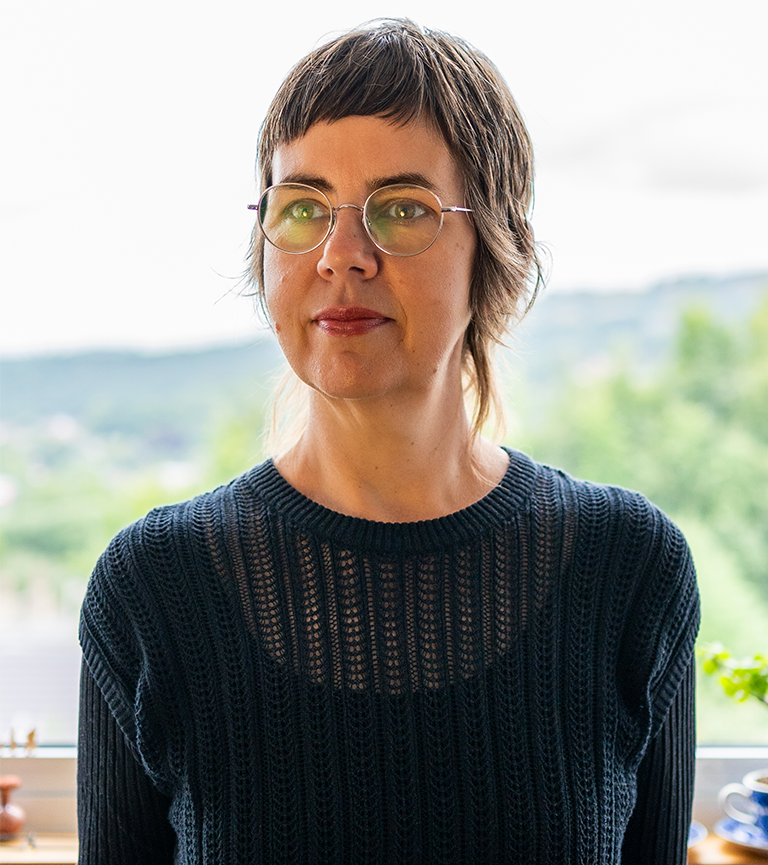
Dr Michaela French is an award-winning artist, designer and researcher whose work spans immersive experiences for live performance, museums and galleries. As the course content author for MA Graphic Design (Online) course, Michaela has played a key role in shaping the course, bringing her industry experience and creative approach into its design.
Beginning her career in fine art and printmaking, her practice has evolved to include animation, filmmaking, motion graphics and projection-based installations. We spoke to Michaela about her creative journey, her approach to visual communication, and the thinking behind the course.
I first discovered my interest in immersive experience design when I began making images move. Suddenly, the work felt alive - it was a way of communicating that was more alive. I realised I loved not just the ideas, but the performance element of creating spaces where audiences encounter those ideas and experience the interaction firsthand. It never gets old - there’s always a moment when you think, yes, that’s beautiful.
I did a degree in Fine Art, majoring in ceramics and printmaking. Then I went on to do a graduate diploma in film and television production at the Victorian College of the Arts in Melbourne [in Australia, that's the film school to go to]. Then I did an MA in digital media production at the film and television school in Sydney, and finally, I completed a PhD at the Royal College of Art in Information Experience Design. It took a long time to do those things because I would study, then I would work for a while, then I'd be ready to put my knowledge into practice and design something. Studying has always been a way for me to punctuate my practice and take time out of my working life to develop my skills and practice further.
If I had to pick the most important thing [and this remains a work in progress], it's to trust your intuition. Know that you can't always see the importance of things at the time. You often don't get to have a career unless you're resilient and persistent, because the creative industries are harsh and competitive, so it requires a lot of trust and resilience. Through all the ebb and flow of freelancing and the changing industries and the evolving tools, it's the persistence that gets you there in the end.
The 4 colleagues I worked with to develop this course are an absolute dream [Ricardo Gonçalves, Antonia Huber, Benjamin Cain and June Mineyama-Smithson]. Each of them has their own design practice, specialisms and knowledge. The commitment they're bringing to each of the units, which have the potential to change the lives and directions of our students’ careers, is just an absolute pleasure and it’s inspiring to watch.
When we think about who's inspiring us, we think about a celebrity or the big heroes, but actually, these guys are my heroes. They're showing persistence and resilience.
London College of Communication (LCC) is an amazing institution with a long history of visual communication in design that challenges the standards and norms of design practice. For example, Henry Charles Beck, the original designer of the London Underground Tube map as we know it, taught at London College of Printing and Graphic Arts, which later became LCC.
The alumni and academia connected to LCC are the kind of glitterati of the design industry. It’s the rigorous kind of approach to education that we'd see being passed on into the industry through the graduates and into the world.
It has to be Systems Thinking and Society because it's the most complex and diverse. It's looking at ideas from a wide range of places and a high level of complexity. I encounter this all the time in my work, so it feels nice to bring those ideas into the course.
Having done postgraduate study myself and taught it in various places and subjects, it's the luxury of having space to explore that gives postgraduate-level value. A Master’s takes you to a level where you're critically engaging in what’s important. For the Graphic Design (Online) cohort, we have people coming from a range of different contexts, so not everyone has a background in graphic design who's taking the course, and we're happy to have that diversity within the cohort. That sets us up for exciting conversations and helps us understand what graphic design means to someone in Europe, versus someone in Southeast Asia, versus someone in North America.
Why would someone not consider a career in visual design. It's an exciting field to be in, and for me, my practice is eclectic and sits across lots of different areas and fields. This reflects what's happening in the industry at the moment. If you are someone who wants to work in visual communication, graphic design is a fantastic medium for that.
One of the clear trends is towards AI and the possibilities that technology provides to the industry. But at the same time, there's a counter trend to that, asking what is the impact? There’s also a very clear dissolving of boundaries between one discipline and another. For example, what was once considered a moving image or typography sat within a very narrow niche. However, the boundaries between these different practices are more blurred now. As graphic designers, there's the potential to navigate across those territories as well as specialise within them.
Another trend I've noticed in the contemporary design field is how designers are beginning to explore ideas related to participation, engagement, environment and community building, which were not previously considered aspects of graphic design.
I mentioned it before, but resilience and persistence are key. Also, having an individual voice – one that’s not just trying to replicate what’s already out there. That's so important that you're not going to be employed for doing the same thing as everyone else - you’re going to be employed because you do what you do and it’s unique. That comes back to trusting your instincts and trusting your creative responses.
It’s interesting because there is a whole field in design called speculative design or conceptual design, which examines future-facing scenarios. It uses data-informed speculation to predict what future scenarios will be, and there’s an increasing trend in the industry to use these strategies to future-proof companies. Even if we looked back 5 years ago, the world to everyone seemed overwhelming and almost at breaking point in some ways. But I wonder if it starts to pull back in, because everyone is so exhausted by the noise and being pushed to their limits all the time. It would be really nice if the future were about making things meaningful and creating space for ourselves again.
The course is designed for people who are curious and ready to lean into things that maybe don't feel entirely comfortable or easy. Learning isn't always about success. Sometimes the best learning comes from doing things that don’t go as you imagined. It’s not about shiny outcomes on this course. It’s about process and understanding how we each approach creative practice. It's a safe space to push hard and test the boundaries of stuff, but you'll take risks and discover what's possible, too.
Do it and get in touch! If you’re considering applying, then take the opportunity to work with the Recruitment Team and ask any questions to see if the course feels like a good fit for you. If you want to explore your creative possibilities with a fantastic cohort of like-minded people, then we look forward to meeting you.
Learn why UAL Online is a fantastic choice to study an MA online. Our online postgraduate courses are taught 100% remotely, with outstanding support for students.
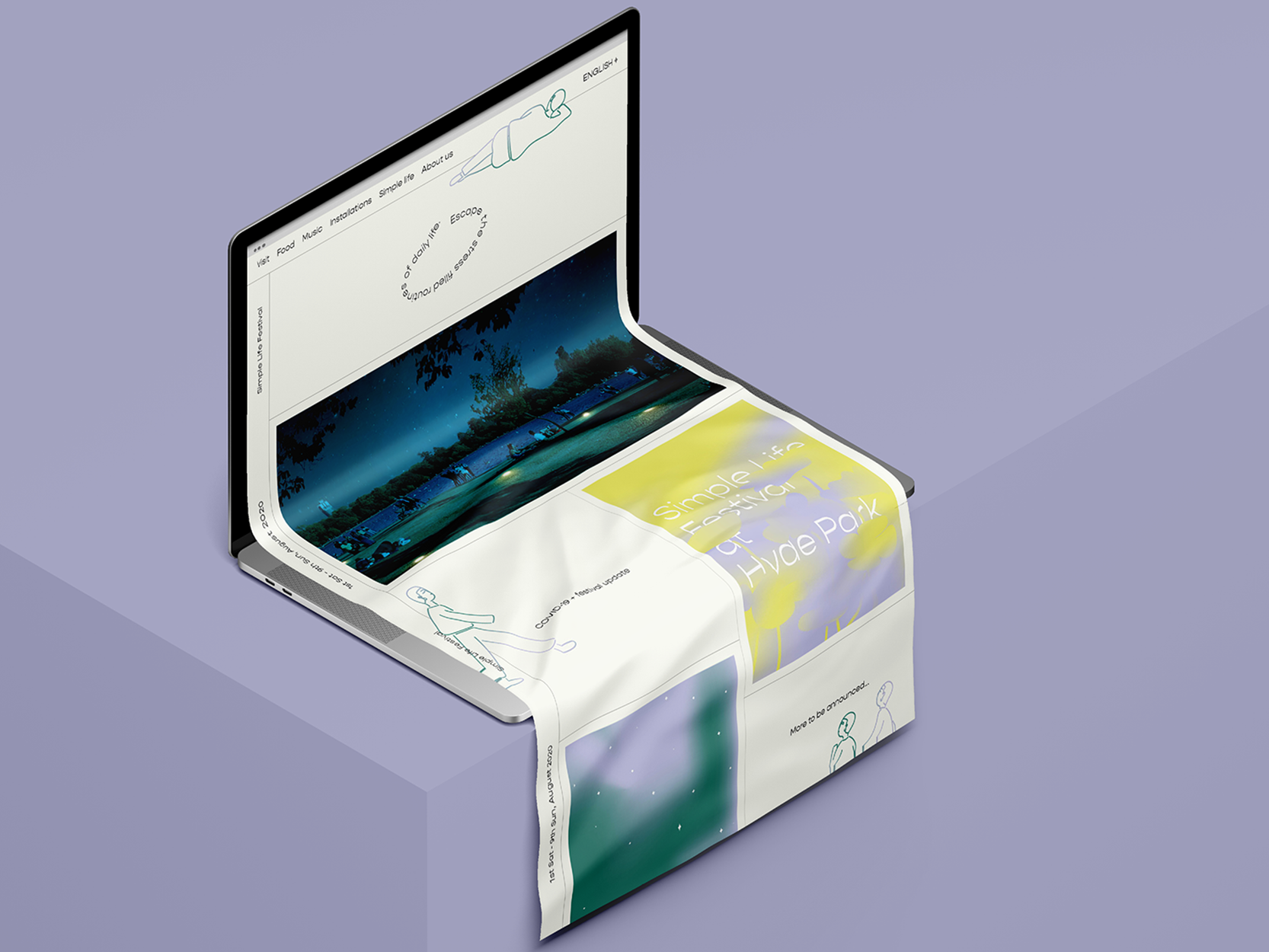
Discover the future of graphic design careers and learn how to navigate a fast-changing industry. Explore top graphic design roles, essential skills, emerging trends like AI and sustainable design, and how to make an impact in your creative career.

Discover what online learning looks like at UAL Online. Find out more about teaching, learning, assessments, student support and much more!

Learn why UAL Online is a fantastic choice to study an MA online. Our online postgraduate courses are taught 100% remotely, with outstanding support for students.