
About us
Learn why UAL Online is a fantastic choice to study an MA online. Our online postgraduate courses are taught 100% remotely, with outstanding support for students.
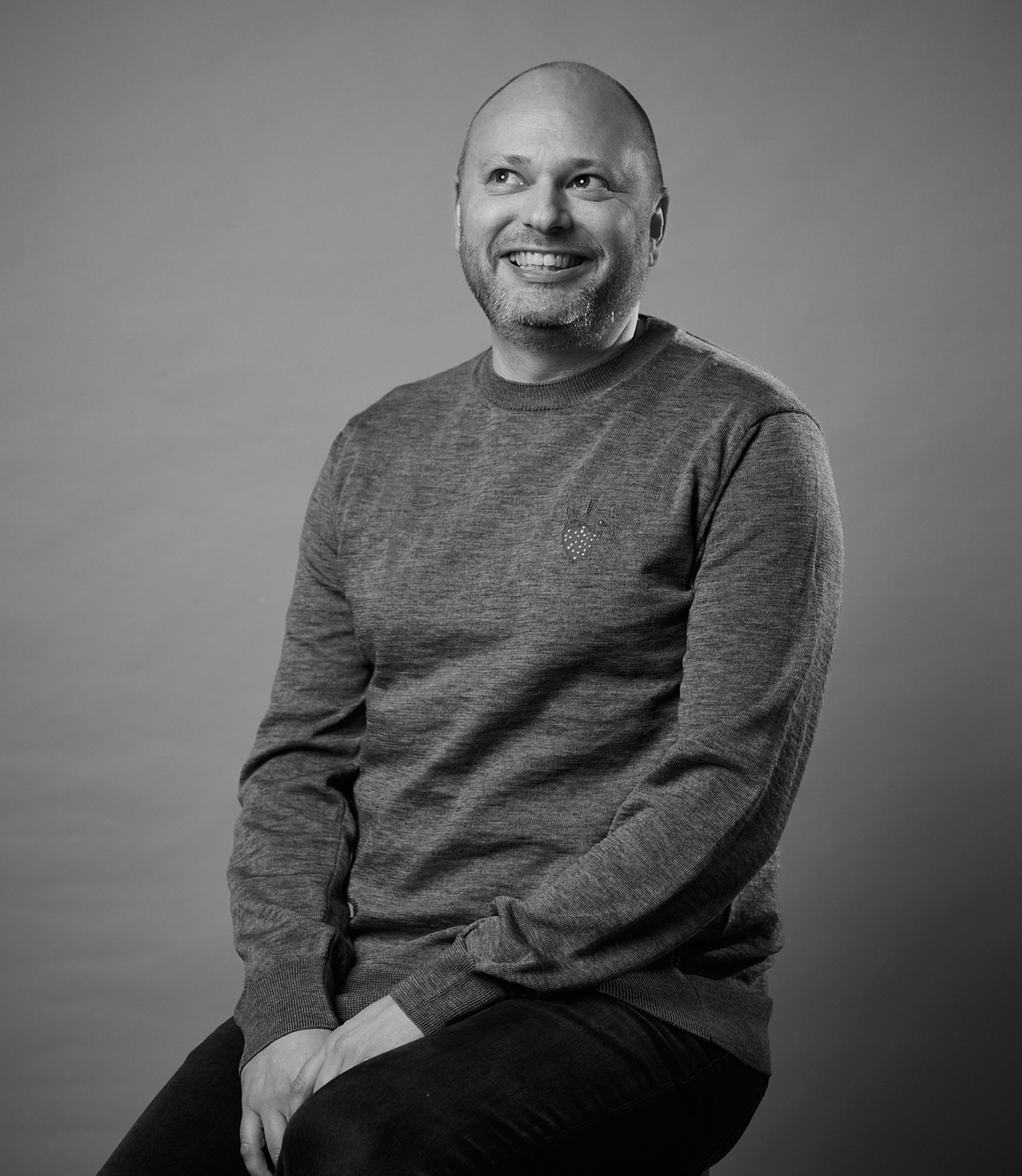
Dr Peter Ainsworth is an educator, visual practitioner, and researcher within photography and computational culture. His practice explores how emerging technologies — from LiDAR and augmented reality (AR) to extended reality (XR) and generative AI — are transforming how images are made, seen, and shared.
Having gained an MA in Photography at London College of Communication (LCC), he's now leading the next generation of image-makers as the Course Leader for UAL Online’s MA Photography and Digital Practice (Online).
Before entering higher education, Peter worked across the art world — from fabricating work in Damien Hirst's studio to a decade handling artwork at Tate, including installations for multiple Turner Prize projects.
We spoke with Peter about what makes this course distinct, how technology is changing photography, and what advice he has for creatives who want to push boundaries and make their mark.
Photography has always been a way to pose ideas and act as a catalyst for my creative practice – whether as source material for work, combined with other media, or simply a way to think through things. About 15 years ago, I began seriously questioning how photography operates and the spaces in which it’s experienced. I became interested in the philosophy of images — how they function, circulate, and shape our understanding of the world.
I used to work mainly in analogue, shooting large-format landscapes that focused on the peripheries of London. But that changed when Apple released the iPhone 4 and Instagram began shaping how people shared and experienced photography — and on a personal level, I was using my smartphone more than my large-format camera or digital SLR to document the intimacies of my life.
Around that time, citizen journalism was also on the rise — from the Arab Spring to the events in London during the summer of 2011 in Tottenham, where I was living at the time. I think the surreality of looking out of my window, while following what was happening on the street through Twitter, had a significant effect on me, particularly as it was unfolding far faster than other media reporting.
I was slow to adopt digital technologies, so it wasn’t until mobile-phone cameras became more widely used than standalone cameras — that I began to change how I understood the medium. I think I was resistant to that change, continuing to use analogue photography, partly in defiance of how technology was being used to amplify issues like body dysmorphia, racial representation, and the idolisation of celebrities.
When automated photogrammetry apps like Trnio were released, I started to appreciate how new possibilities in imaging technology were being compressed into the mobile device. That’s when I saw photography and technology intersecting in ways I hadn’t seen before, and I wanted to explore further.
I studied Fine Art at Nottingham Trent University, where I used photography as a source for printmaking or in combination with painting, collage, and sculptural installation. It was in my final year that my work became more focused on photography.
After graduating, I took some time out from education. My degree had given me lots to think about, and the transition back to London — rebuilding the communities I was part of while earning enough to sustain myself — took some time. During this period, I worked in various roles, including as a fabricator for Damien Hirst and at Tate, helping to install exhibitions such as the Turner Prize. Those experiences offered a valuable insight into how exhibitions are produced and how artworks circulate institutionally. I was also beginning to navigate a niche I wasn’t very familiar with - the photography world.
To develop my work further, I did several portfolio reviews and gained opportunities through them, particularly via Rhubarb Rhubarb in Birmingham and Format in Derby. The most valuable advice I received was that I needed to understand the medium I was working with in much greater depth, because my portfolio needed further development and focus. I applied for an MA in Photography at LCC, UAL, where the tutors significantly expanded my understanding of what photographic practice could be. It opened my eyes to new ways of thinking and making, which I’m very grateful for.
After completing my MA, I was fortunate to get sessional teaching work back in Nottingham, following a commission run jointly by the National Media Museum [Bradford] and Pavilion [Leeds]. Over the next 10 years, I taught in various roles across the UK until getting a job on the Photography BA at LCC in 2018. It wasn’t until I took some adult-education courses at the Mary Ward Centre — where I joined a series of seminars on contemporary philosophy — that I gained the confidence to publish my first peer-reviewed paper and apply for a practice-based PhD at Goldsmiths in the Department of Visual Culture. My research focused on how the computational imaging capabilities of mobile-phone technology can be used by museum visitors to explore and question the institutional narratives embedded within exhibition spaces.
My interest in teaching photography developed from questioning how images shape knowledge and how creative work depends on collaboration. Teaching extends that process — it’s about creating dialogue and experimentation in an environment of care and respect. My MA taught me the importance of collaborative practice, and working at Tate reinforced that creative processes are never individual; they rely on networks of people coming together to make something happen. I see teaching as a reciprocal exchange, supporting students in developing their own positions while continuing to refine my understanding of how imaging processes evolve and reshape cultural practices.
I’m into Jungle music — I have been since it emerged in the early 1990s. I still remember being a teenager and going to Blackmarket Records on D’Arblay Street when Metalheadz (Goldie)’s 1992 track Terminator came out and being completely blown away by its intensity in that loud, dark, and intimate basement space. Mark Fisher’s analysis of that tune in relation to hauntology really resonated with me when I read it while studying at Goldsmiths.
I’m not sure if it’s directly related, but I’m also fascinated by how speculative fiction and sci-fi have been used by Big Tech figures to imagine and legitimise their versions of the future — from Elon Musk’s references to Iain M. Banks’ post-scarcity society in the Culture series to Sam Altman’s comparison of GPT’s chat function to Spike Jonze’s film Her. There’s something significant in thinking through these different forms of world-building to understand the conditions of the present.
I often return to the Immaculate Heart College Art Department Rules, particularly at the start of academic terms. They remind me that creative practice depends on persistence, care, and open-mindedness — that nothing is a mistake, it’s OK to trust, and you can’t make and analyse at the same time.
I’ve learned that comparing yourself to others never leads anywhere productive. You have your own approach; others have theirs, and that’s OK. Being inspired to make work or to admire what you see is one thing — creative jealousy and triangulation are another. The culture you build around your work — one grounded in respect, equity, and openness — is as important as the work itself. It’s far more valuable to lift each other up than to buy into the models of competition and value that often pervade the arts.
I love the work of Zanele Muholi. It’s both beautiful and challenging, connecting advocacy and community work with personal expression, a strong aesthetic, and innovative exhibition experiences.
I’m also deeply influenced by Hito Steyerl and her ability to translate and poetically explore complex ideas about technology in accessible, humorous, and thought-provoking ways. I’m particularly drawn to her performance lectures.
Ruha Benjamin’s writing on algorithmic bias and her insistence on imagining and growing the world has been instrumental in shaping the direction of my recent work — particularly in the development of this photography course.
LCC brings together creative practice, technology, and critical theory. It’s a place that encourages you to question what creative practice can do and why it matters. You’ll be working alongside people with a wide range of perspectives — shaped by different geographies, cultures, neurodiverse experiences, and socioeconomic contexts. That exposure to new ways of working, thinking, and making is what makes studying at LCC so inspiring.
It’s a new course and a new approach to learning — designed for people working across time zones and disciplines. I’m excited to see how they build confidence in their ideas, experiment with emerging technologies, and expand the boundaries of what visual practice can be.
Students on this course are encouraged to connect the ways photography and computation are evolving, using that relationship to explore how creative practice can adapt and respond in an age of automation and immersive media.
Final Major Project 1 marks the beginning of the MA’s culmination, where students start to consolidate their research and experimentation. By this stage, they will have built a strong foundation of conceptual and technical approaches and will be ready to push their practice into new territory.
This is where critical reflection deepens and students begin to see how seemingly narrow subjects open into complex, interconnected questions. These moments of expansion and focus often lead to the most exciting breakthroughs — developments that take students into unexpected but rewarding territory. It’s also the point where they set the tone for the next stage of their practice and prepare to relaunch their work within the creative spaces they’ve identified as most important to them.
This is perhaps old news, but it’s worth repeating that short-form video has become the dominant mode of lens-based communication. I recently attended a conference at LCC where a news agency recommended shooting vertically, embracing first-person narrative perspectives, and always capturing video alongside stills, as most audiences now view content on smartphones.
Another major shift is AI-generated content — particularly video. While much of this technology still produces low-quality or derivative material, that’s unlikely to remain the case. Tools such as Runway ML, Midjourney, and Sonar — still seen as novel, emergent, and yet to find a credible niche — will increasingly be used by creatives in innovative and challenging ways, while also opening the door to more troubling, racist, sexist, and unethical applications.
Technical ability is important, but adaptability and critical curiosity matter just as much. Learning the fundamentals of software — especially in areas like 3D imaging and computational processes — gives you transferable skills and the confidence to approach new tools as they emerge.
It’s also about questioning how technology shapes the way you think, what you value, and the ethics that guide your choices. Building communities around your work is vital — creative practice doesn’t exist in isolation. Making is only part of it; it’s also about connecting thoughtfully, asking who your practice serves, how it operates, and what it contributes. The answers to those questions shape not only your work but the kind of practitioner you want to be.
We’re in an interesting moment where long-standing debates about photography’s relationship to truth and fact are being redefined by AI-generated imagery that's increasingly indistinguishable from images captured through a camera sensor.
The factualness of AI-generated images is still largely understood as belonging to a fiction of something. Over time, however, I suspect AI-generated artefacts will enter debates surrounding news media and personal representation in more consistent and pervasive ways. The impact this will have on journalism, politics, and our personal lives — as deepfakes become ever easier to create and distribute — remains uncertain.
While the current discourse focuses on what these images depict, I think new ways of thinking will emerge — building on current theories concerned not only with representation, but with how images are made, circulated, and interpreted. Pulp AI-generated social-media imaging culture — cheap, fast, addictive, and endlessly generative — has become the background noise of contemporary visual experience. This will be especially significant as younger generations, currently immersed in these conditions, grow into the creative practitioners and thinkers of tomorrow. Thinking ecologically about networks of images, rather than isolated examples, will become increasingly important.
Curiosity, openness, and a willingness to take risks. You don’t need to arrive with all the answers to your concepts or ideas; you just need to be ready to experiment and think critically about how your work and the things you’re making are situated in the world.
It’s an opportunity to develop your creative practice. It’s a space where you can push your work further than you thought. Bring your perspective, your experiences, and your questions. Use the course to challenge what photography can be — and where it might go next.
Learn why UAL Online is a fantastic choice to study an MA online. Our online postgraduate courses are taught 100% remotely, with outstanding support for students.
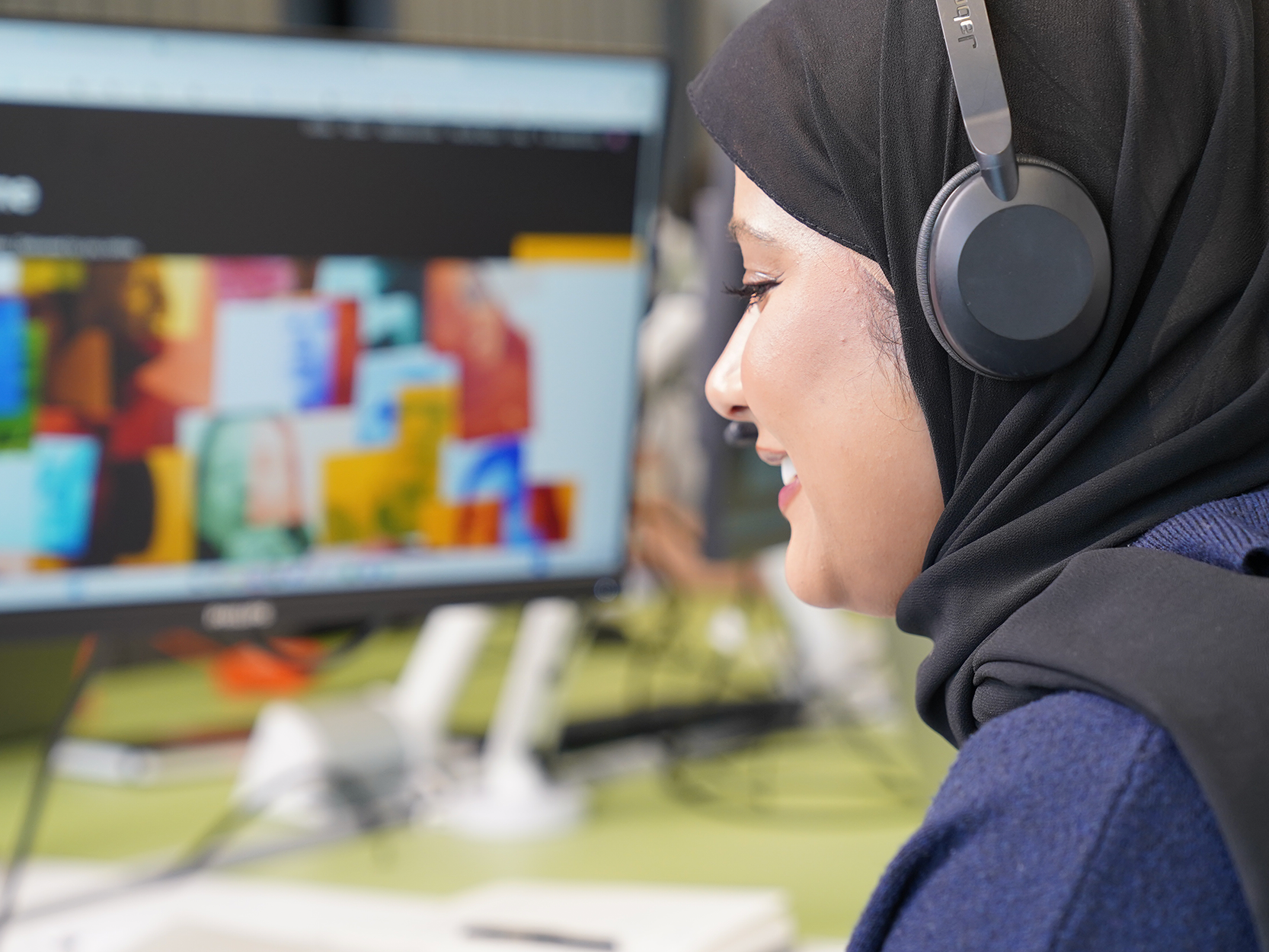
Reach your full potential when applying for a UAL Online course with the support of a UAL Online Recruitment Advisor. Discover how expert guidance can elevate your portfolio, application, finance choices and connect you with the right opportunities.

Discover what online learning looks like at UAL Online. Find out more about teaching, learning, assessments, student support and much more!

Learn why UAL Online is a fantastic choice to study an MA online. Our online postgraduate courses are taught 100% remotely, with outstanding support for students.