
About us
Learn why UAL Online is a fantastic choice to study an MA online. Our online postgraduate courses are taught 100% remotely, with outstanding support for students.
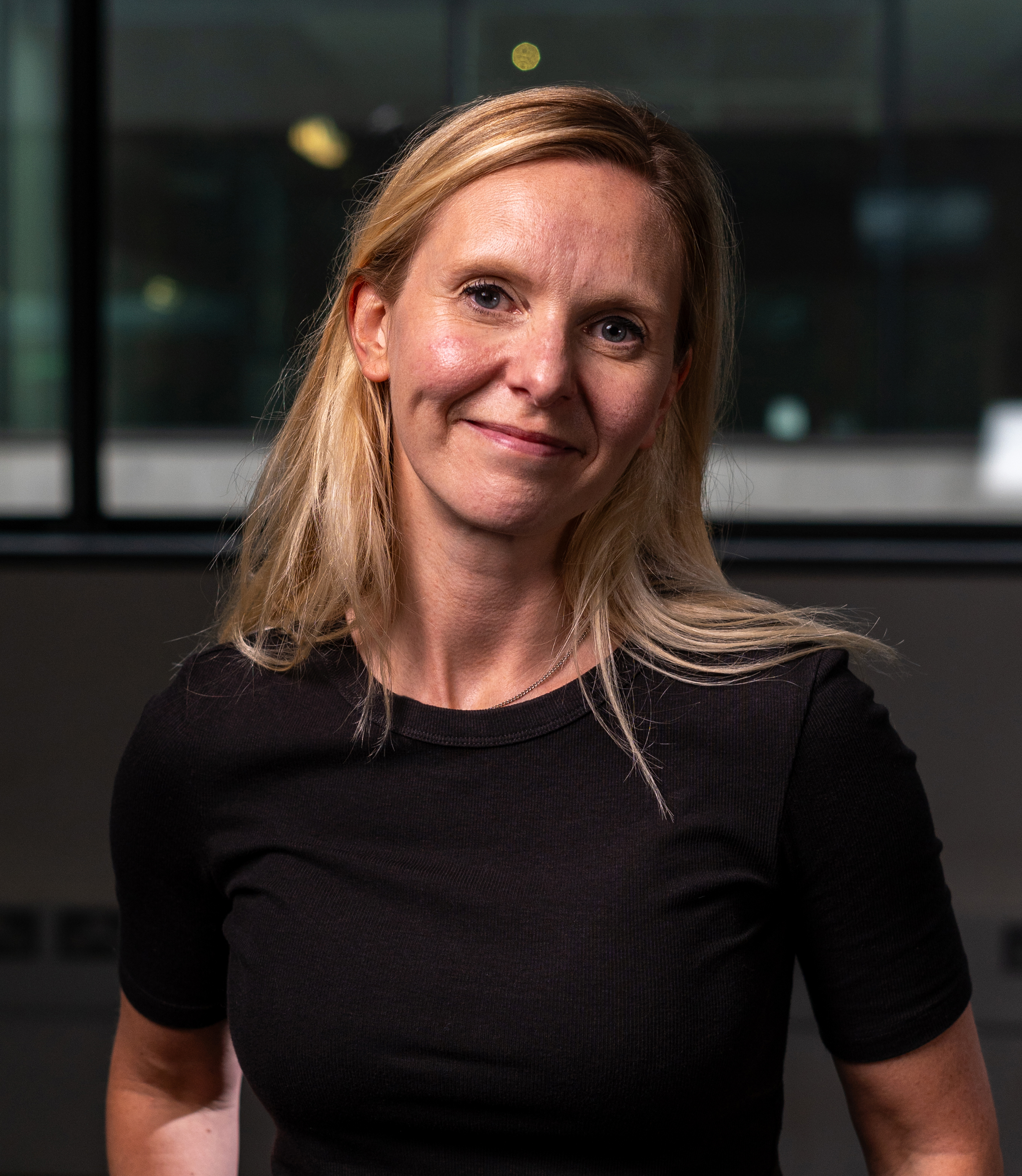
Dr Sophie Frost is a researcher, writer and practitioner with almost 20 years’ experience across the arts, culture and heritage sectors. As Course Leader for MA Creative Leadership (Online) at Central Saint Martins x UAL Online, she brings a unique, future‑focused approach to leadership - one shaped by a career spent helping people and organisations navigate change with creativity, curiosity and care.
Her work spans major cultural institutions including the Southbank Centre and Science Museum Group, as well as smaller community venues like the Albany Theatre in Deptford and Belmont Cinema in Aberdeen. She has collaborated with arts education philanthropists like Freelands Foundation, volunteer run charities including Greenham Control Tower, and sector support organisations such as the Arts Council England and The Audience Agency.
Now a British Academy Innovation Fellow (policy‑led), Sophie is embedded within the Department for Culture, Media and Sport, exploring how digital innovation can strengthen the UK’s cultural and creative industries.
We spoke with Sophie about what makes this leadership course different from traditional offers, how creativity can positively reshape the way we lead, and what she’s looking for in an online student.
We know that creativity drives change, new solutions, and novel ideas, but it doesn’t have to be groundbreaking or world-changing. It can be found in everyday problem‑solving, self‑expression, and finding new ways of doing things. For me, creative leadership begins with a genuine commitment to improving the world around us, and the institutions and communities that shape it. I’ve worked across arts and cultural organisations of all sizes and seen many forms of leadership. Oftentimes the leadership has been visionary and exciting, but at other times it’s been less effective.
There’s so much that’s challenging about the world right now. Empathetic leadership which helps surface hidden voices and supports people’s growth has never been more important. The spirit in which you lead - the vision, passion, and values you bring - directly shapes your team’s experience. It can be the difference between someone feeling valued or overlooked.
Another valuable lesson is not taking things too personally. Not everyone will appreciate your approach, and that’s ok. It’s better to try and fail than stay silent out of fear.
As Samuel Beckett said, “Ever tried. Ever failed. No matter. Try again. Fail again. Fail better.” Leaning into what feels challenging is often where the greatest growth happens.
Leadership is so subjective – everyone has an opinion on it. I try to be a magpie – to absorb as many different perspectives as possible and stay curious to new creative and experimental ideas and practices that can shift the dial on my thinking.
Writers who influence me tend to be socially and ecologically justice-focused. adrienne maree brown’s work on emergent strategy explores the deep, complex ground from which humanity grows. Vanessa Machado de Oliveira’s Hospicing Modernity emphasises vulnerability and integrity in navigating complexity. Rebecca Solnit positions hope as a catalyst for action. And Audre Lorde’s belief that creativity emerges through difference is foundational to how I think about leadership.
While these writers are hugely influential, it’s important to stay up to speed on current leadership decisions – across governments and in different industries, organisations, and communities. High-profile leadership appointments – such as the recent recruitment of a former Google exec to the top role at the BBC – reveal so much about where we are as a society.
My current research with the UK government explores how digital innovation can drive economic growth across the UK’s cultural and creative industries. This follows several years of researching and writing about the impact of digital technology on cultural workforces, and how digital innovation is shaping the future of the sector.
But when I was 16, I desperately wanted to be a fashion designer (and I’m still obsessed with clothes). I studied a BTEC Diploma in Art and Design Foundation Studies at Kingston University where I quickly realised I wasn’t going to be the next Vivienne Westwood. I now realise that art, design, and popular culture have always been about self-expression and self-identification for me, helping me affirm who I am and give me confidence to make marks and leave traces.
I’m inspired by anyone relentless in their pursuit of social justice. Feminist leaders like Adele Patrick, co-founded Glasgow Women’s Library, has been tireless and amazing in her approach to what that institution can do and represent for its communities.
I’m inspired by new approaches to cultural leadership, such as the shared CEO model of Sara Wajid and Zak Mensah at Birmingham Museums Trust, which shows a genuine commitment to inclusive and alternative forms of institutional management.
Thought leaders on culture, politics, and society get me out of bed in the morning; activists, writers, and theorists like Kimberlé Crenshaw, Georgina Born, and Mar Hicks who continually expand my thinking. I’m currently reading human rights lawyer Nani Jansen Reventlow’s book Radical Justice, and her assertion that the professional is political is really galvanising.
I don’t want to forget those in my own lived experience who have modelled the kinds of leadership skills that were inspiring and inclusive – we’ve all had these people – teachers, parents, parents’ friends, doctors, religious figures, former managers, people you meet on the bus… my parents are probably my biggest thought leaders: they were relentless in their pursuit of self-development and lifelong learning, and they nourished this appetite in me too.
Central Saint Martins is uniquely placed to offer a critical leadership education. It has a global and historic reputation for pushing creative boundaries to make change happen. Its culture is interdisciplinary, experimental, and highly creative. Students are encouraged to find their voice, develop agency, and cultivate an entrepreneurial spirit. At CSM, we understand leadership as an act of creation, a material to be worked on. The artistic and design-centred practices embedded in the course help students lead with curiosity, experimentation, and embrace failure, collaborate across boundaries, and reframe what leadership means in the 21st century.
We’re at a moment where creative thinking is widely recognised as essential for institutional change, yet there’s little formal understanding of what it looks like in practice. Students joining the course now will have an opportunity to be at the cutting edge of a movement – to figure out, together, what it means to creatively lead and what creative leadership is defined by.
Business and creativity have never been separate forces — as Warhol said, “good business is the best art.” We know that it can be challenging to bridge the often-divided worlds of business and creative practice — but rather than smoothing over this tension, this MA turns it into its greatest asset. It treats it not as a compromise but as a space of innovation, criticality and opportunity.
I’m excited to work with students to critically frame what leadership means today and the role creativity plays within it. We hope to welcome established and emerging leaders from inside and outside the cultural and creative sectors. I can’t wait to facilitate wide ranging and engaged debates about the possibilities for creative leadership and change making.
Rethinking Leadership Narratives: Past, Present, Future. It examines the intellectual foundations that shape our understanding of leadership. We’ll explore how creativity has been positioned within traditional leadership approaches and interrogate how leadership knowledge has been produced and legitimised. I love the practice of bricolage – creating something new by improvising and combining a diverse range of readily available materials or ideas - this is what I’m trying to encourage students to do during this unit. They’re going to take a bricolage approach to understand what it means to lead, to figure out how it is most relevant and resonant for them.
You’ll also find interdisciplinary approaches are interwoven throughout the course: drawing upon different disciplines and ideas helps us to develop a unique and progressive perspective on leadership.
We’re living through what some call a poly‑crisis — climate emergency, relentless digital exposure, political polarisation, burnout, cultures of fear and rising mental health challenges. The skills needed to navigate this landscape are shifting, and traditional leadership models are no longer enough. A recent Forbes study highlights trends such as scaling technology thoughtfully, leading with humility and curiosity, and elevating human skills that keep workplaces grounded.
The World Economic Forum’s recent Future of Jobs report has highlighted that analytical and creative thinking are critical skills for future employment, especially given the increasing role of AI in so many aspects of our jobs.
So-called “soft” skills are now foundational skills; communication, collaboration, and agility are as important, if not more important, than technical competencies. Empathy, emotional intelligence, and ethical decision-making are vital for effective leadership, for the management of diverse, intercultural, and hybrid teams, as well as for transformational change more broadly.
It has never felt more urgent to stay critically and ethically attuned to the realities of new technologies; it is important to have the courage to experiment and play with AI and to carefully consider the challenges and opportunities these tools can bring to our workplaces, our humanity, and our planet.
Above all else, centering leadership as part of an ongoing, iterative, and self-reflective practice feels like the right approach given the times we are living through. We need leaders who have a strong understanding of their positioning and lived experience, and the power and responsibility they hold.
There’s a growing appetite for a richer, more agile, intuitive, and creative understanding of leadership. It feels like a critical time to replace extractive practices with approaches that nurture resilience and renewal. I hope leadership will increasingly be seen as a lifelong, evolving practice grounded in transparency, collaboration, and integrity to make things happen.
Our students will come from a wide range of backgrounds and career stages, but what they share is that they’re busy – often balancing demanding professional and personal lives. This course is designed to fit around students’ lives, meeting them where they are. Some will already have leadership experience, others will be aspiring to step into those roles – but all are looking to rethink what leadership means, to reflect more deeply on their practice, and to learn through open dialogue with others. Students will be seeking a safe space to grow, connect, and lead with intention.
Students who are deeply curious, open‑minded, collaborative, eager to create change, and ready to apply creative thinking to complex contemporary challenges.
I can’t emphasise this enough: this is not a leadership course that sits within a traditional business school environment. UAL’s renowned arts education — experimental, collaborative, critically engaged — combined with future‑focused business literacy grounded in creative practice, makes this course one of a kind. We aim to nurture adaptable, ethically grounded leaders capable of navigating complexity across today’s diverse working environments.
Learn why UAL Online is a fantastic choice to study an MA online. Our online postgraduate courses are taught 100% remotely, with outstanding support for students.

Discover what online learning looks like at UAL Online. Find out more about teaching, learning, assessments, student support and much more!

Learn why UAL Online is a fantastic choice to study an MA online. Our online postgraduate courses are taught 100% remotely, with outstanding support for students.
Creative leadership is becoming vital as workplaces evolve. Discover why creativity, empathy and analytical thinking matter more than ever.